Introduction
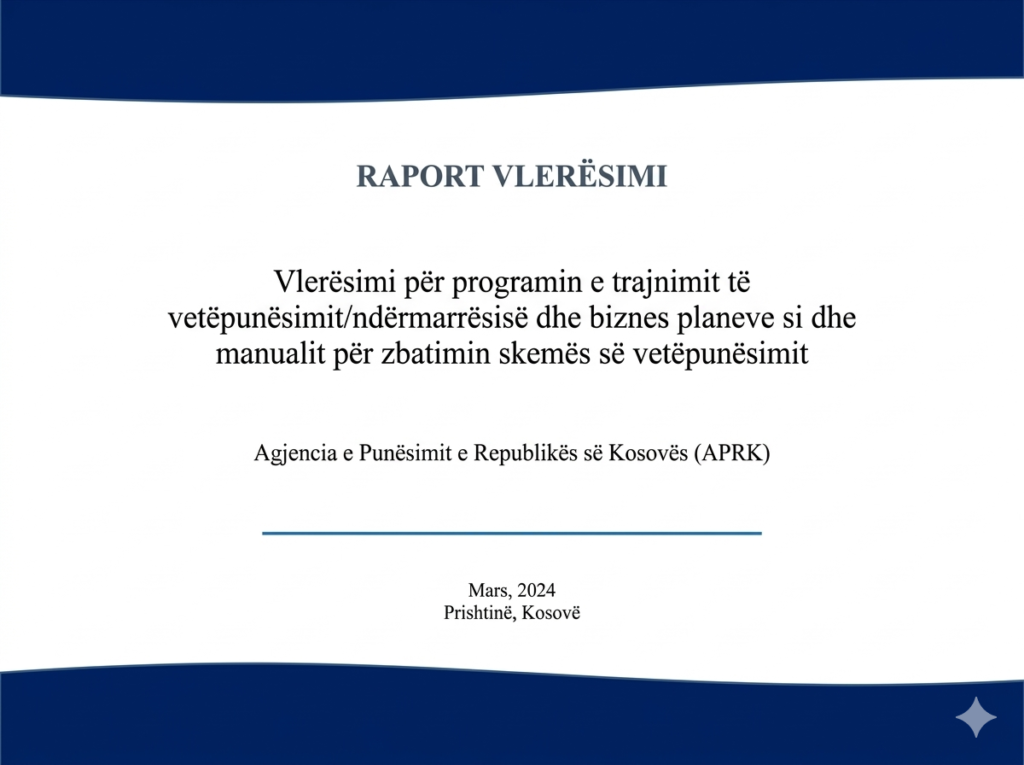
An evaluation of the training program and the self-employment scheme manual has provided important insights into improving support measures for entrepreneurship and employment in Kosovo.
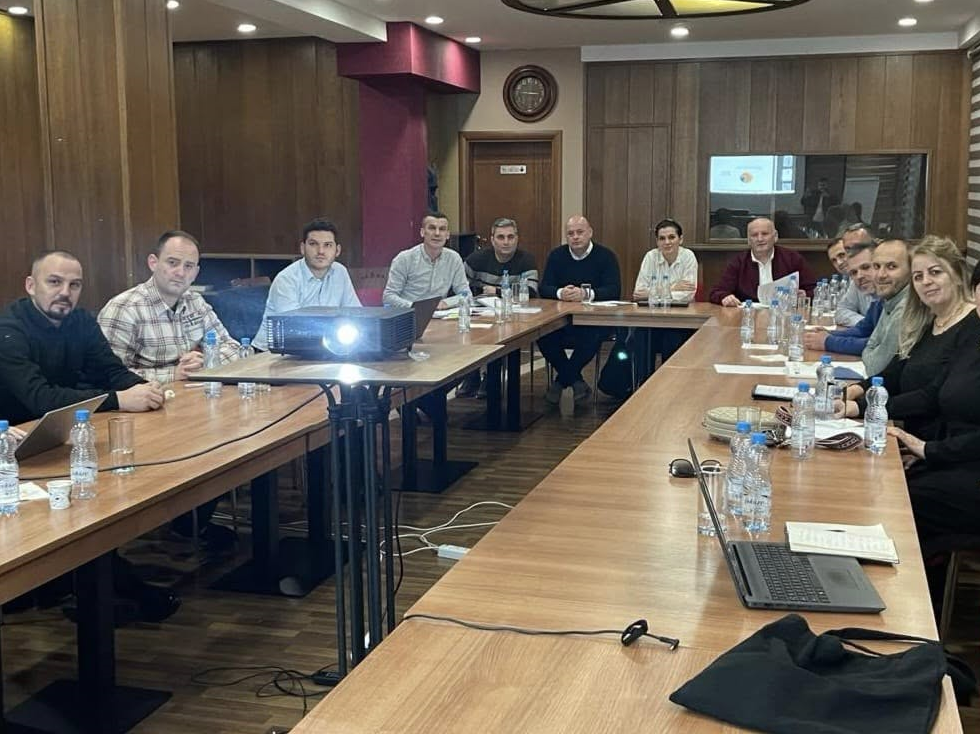
The report was prepared by Driton Berisha in cooperation with the Ministry of Finance, Labour and Transfers and the Employment Agency of the Republic of Kosovo (EARK), with support from the German Government through GIZ.
Purpose of the evaluation
The evaluation focused on two key components:
- Implementation of the self-employment training program
- Effectiveness and usability of the self-employment scheme manual
The aim was to assess performance, identify gaps, and provide recommendations to improve future implementation.
Implementation overview
The training program targeted young people from vulnerable groups aged 18–29, aiming to strengthen entrepreneurial skills and support business creation.
Key elements of implementation included:
- Training delivered through Vocational Training Centres (VTCs)
- External Training Provider (ETP) engaged by GIZ
- Implementation coordinated by EARK and employment offices across eight regions
To support implementation, two dedicated committees were established:
- Administrative Evaluation Committee (AEC)
- Business Plan Evaluation Committee (BPEC)
Key findings
The evaluation identified several important findings:
- The training program was implemented in line with its objectives
- Participation levels were satisfactory, with positive impact on beneficiaries
- Training methods were effective but require better adaptation to individual needs
- Business plan development and market access remain key challenges
It was also noted that the self-employment manual was not consistently used during implementation due to the existence of multiple versions and lack of clarity on the officially approved document.
Challenges identified
Several operational challenges were highlighted:
- Limited training duration for complex topics
- Difficulties in business plan preparation
- Delays in financial support processes
- Complexity of reporting and documentation procedures
These challenges affected both beneficiaries and implementing institutions.
Recommendations for improving the training program
To enhance effectiveness and impact, the following improvements are recommended:
- Increase the value of financial grants
- Accelerate the process from application to disbursement
- Provide timely communication on reporting and monitoring requirements
- Simplify business and financial planning templates
- Adjust co-financing requirements
- Extend training duration and provide continuous support
- Deliver clearer and more structured calls for applications
Improving the self-employment manual
The evaluation highlights the need for a revised and standardized operational manual.
Key priorities include:
- Development of a single, officially approved manual
- Clear and user-friendly guidance for all stakeholders
- Alignment with labour market needs and programme objectives
- Inclusion of all stages of implementation, from application to monitoring
The manual should serve as a practical tool for institutions, trainers, and beneficiaries.
Conclusion
The evaluation demonstrates that the self-employment training program has strong potential to support entrepreneurship and employment in Kosovo.
By addressing identified challenges and improving both implementation processes and operational guidelines, the scheme can become more effective, accessible, and aligned with the needs of beneficiaries and the labour market.
Copyright & Attribution
This article is a publication of ITED – Institute for Training & Economic Development. It may be freely reproduced, shared and used, provided that ITED is clearly acknowledged as the source and producer of the content.