
Introduction
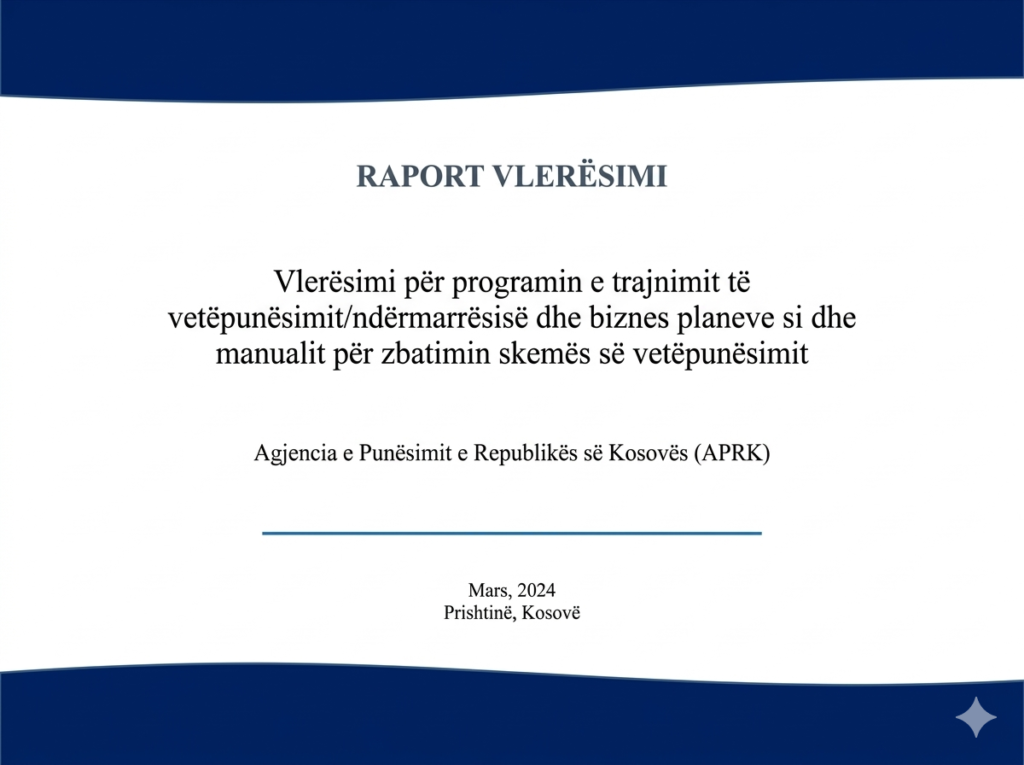
An evaluation of the Coupon/Voucher Instrument implemented in Kosovo has provided important insights into strengthening active labour market measures and improving employment support programmes.
The evaluation was conducted to identify challenges during implementation and to propose improvements for future application of the instrument.
Purpose of the evaluation
The assessment focused on reviewing all phases of the Voucher Instrument implementation to ensure a more effective and transparent process.
The evaluation aimed to:
- Identify gaps and operational challenges
- Improve implementation through updated guidelines
- Strengthen monitoring, documentation, and reporting processes
The process was carried out in line with the cooperation framework between the Employment Agency of the Republic of Kosovo (EARK) and GIZ, as well as relevant institutional decisions.
Implementation overview
The Voucher Instrument was piloted during 2023/2024 by the Employment Agency of the Republic of Kosovo (EARK), in cooperation with Employment Offices operating at municipal level.
The pilot involved:
- Officials from EARK and the Ministry of Finance, Labour and Transfers
- Representatives from regional employment offices
- Vocational Training Centres in Prishtina, Mitrovica, and Ferizaj
The initiative aimed to support job seekers through training opportunities aligned with labour market needs.
Key findings
The evaluation highlighted several important aspects of the implementation process:
- The need for clearer communication and awareness of the instrument
- The importance of structured coordination between institutions
- The necessity for improved procedures in application and implementation
The findings confirm that the instrument has strong potential but requires further refinement to maximize its impact.
Recommendations for improvement
To strengthen the effectiveness of the Voucher Instrument, several key recommendations were identified:
Strengthening outreach and awareness
- Expand marketing efforts through social media, schools, universities, and business associations
- Ensure employment officers are well-informed to guide applicants accurately
Expanding sector coverage
- Introduce additional training sectors based on labour market demand
- Update training offers regularly to reflect economic needs
Improving training standards
- Define clear and transparent criteria for training providers
- Ensure candidates understand training duration and content from the outset
Enhancing operational procedures
Key improvements are recommended across different stages:
Application process
- Transition to a fully online system
- Clarify eligibility criteria
- Prioritize registered job seekers
Tendering process
- Establish clear requirements for training providers
- Ensure accreditation of training programmes
Implementation and monitoring
- Provide guidance and information sessions for training providers
- Ensure all participants are assessed and certified
- Standardize monitoring and reporting procedures
Conclusion
The evaluation of the Voucher Instrument demonstrates its potential as an effective tool for supporting employment and skills development in Kosovo.
By addressing identified challenges and implementing the recommended improvements, the instrument can contribute to more efficient, transparent, and impactful employment programmes aligned with labour market needs.
Copyright & Attribution
This article is a publication of ITED – Institute for Training & Economic Development. It may be freely reproduced, shared and used, provided that ITED is clearly acknowledged as the source and producer of the content.